

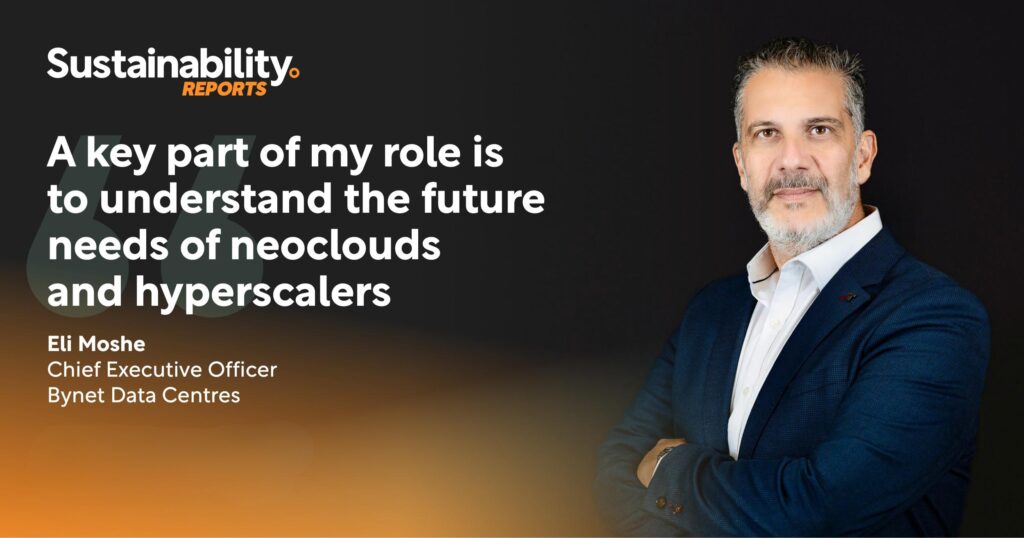
CEO Eli Moshe and CTO Moti Tau talk exclusively to Data Centre Magazine about pioneering infrastructure, the power of flexibility and why the next generation of data centres must be built differently
Bynet Data Centres has appeared in the March issue of Data Centre Magazine.
In this exclusive interview, CEO Eli Moshe and CTO Moti Tau discuss the company’s growth and how it is spearheading Israel’s digital infrastructure revolution.
They explain how the business, founded in 2023, is strategically focused on delivering pioneering next-generation technologies including advanced cooling and power management in order to provide scalable and sustainable future infrastructure for local and global customers.
For years, growth in data centres was driven by a relatively linear approach based around storage requirements: disks got bigger, data volumes increased and organisations needed more space. The global pace of AI innovation and adoption, however, has forced builders and operators to shift their methodology.
“It’s been a revolution,” says Eli, “but we are now at the point where storage is not a challenge, compute is. And with that comes more difficult requirements around energy management, finding the land for large-scale projects, cooling and sustainability.”
Bynet’s customer base of more than 120 organisations across its five operational data centres provides clear evidence of this shift, Eli says. Racks requirements that began at 5 kW are now closer to 30-40 kW, for example.
Moti Tau, Bynet’s Chief Technology Officer, is seeing the transformative nature of AI firsthand. Moti joined Bynet Data Centers in late 2024, after five years with the Bynet Group. Prior to this, he worked as a consultant on large-scale data centre projects and spent time at IBM.
“Around three years ago, when AI development really picked up, everything changed,” he says. “It meant that for companies like ours, growth was exponential and, from a technology perspective, everything needed a new approach – power, equipment, partners, cooling and the design of the data centres themselves. It also requires pace; the data centre you planned two or three years ago just won’t work in the future if you haven’t ensured every aspect is AI-ready.”
The leaders explain how Bynet’s strategic response has been to design its next generation of facilities specifically for AI readiness. The company is developing two flagship sites in Jerusalem and Soham, both engineered to handle the power densities and variable loads that characterise modern AI workloads.
Discussing future strategy, Eli says: “The market grows quickly, and so we have to stay focused on operations, technology and building. AI is a fantastic opportunity, not just for Bynet but for the world, giving us a real chance to solve some of our most pressing challenges. I’ll be happy if I know I was able to wake up each morning and build the infrastructure that supported that.”
Read the full interview in the latest issue of Data Centre Magazine.